

UNDERSTAND YOUR OPTIONS
Restoring the way your teeth work.
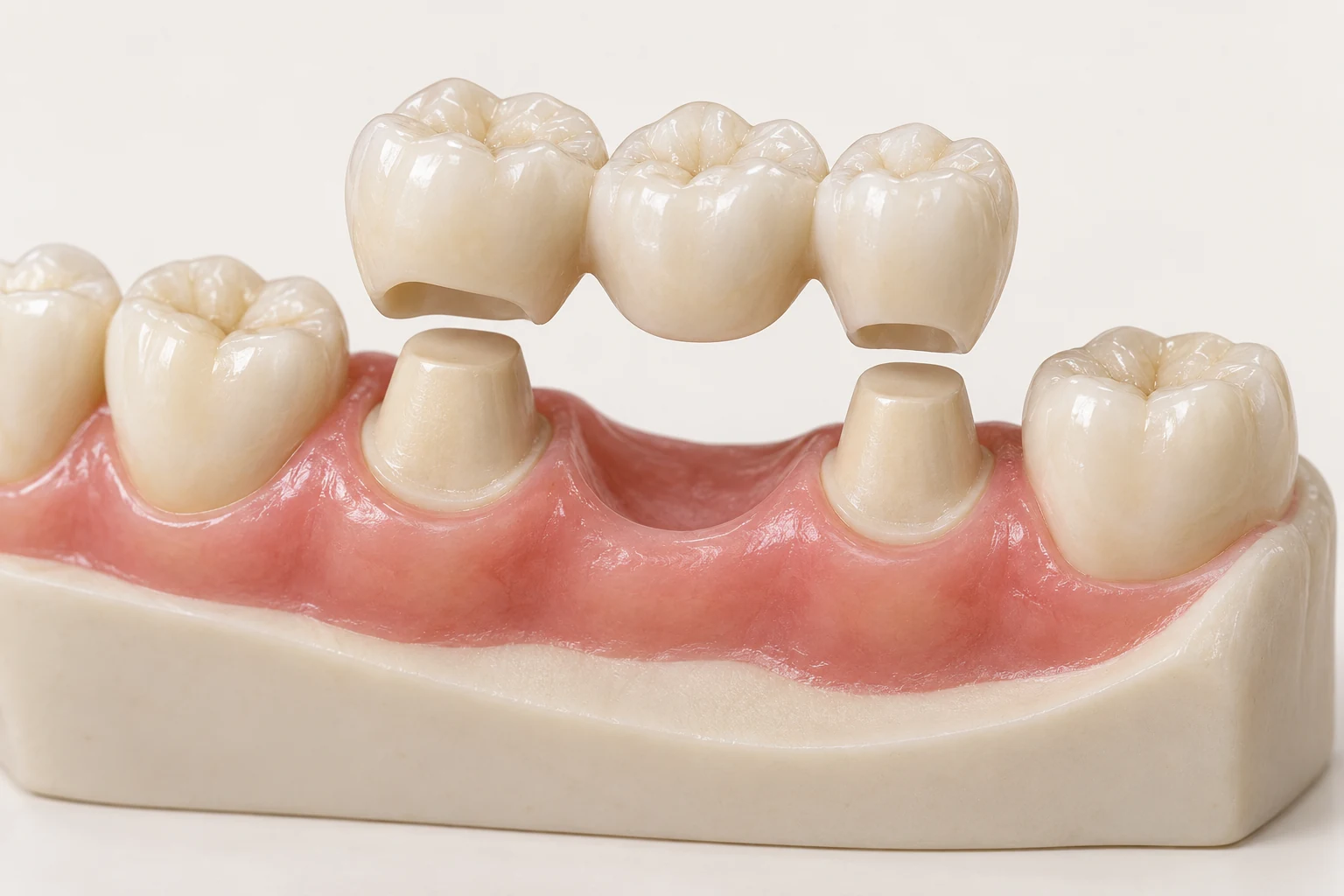
Crowns and bridges are dental restorations used to restore damaged or missing teeth. A crown is a custom-made cap placed over a damaged or decayed tooth to restore its shape, size, and function. It provides strength and protection to the tooth, preventing further damage. A bridge, on the other hand, is used to replace one or more missing teeth by anchoring artificial teeth to adjacent natural teeth or implants. Both crowns and bridges are made from durable materials like porcelain or metal, offering a natural appearance and improved functionality, enhancing both the aesthetics and health of the patient's smile.
WHAT THIS CARE CAN OFFER
Care, with a clear purpose.
Restores tooth functionality
Improves dental aesthetics
Durable and long-lasting solutions
AT YOUR CONSULTATION
Let’s talk it through.
Your dentist will examine your teeth, ask about your concerns, and explain the options that fit your needs. There’s time to ask questions before you decide.
Your dental healthTell us about your symptoms, previous treatment, and any medical information your dentist should know.
Your treatment planDiscuss the recommended care, alternatives, expected visits, and costs.
Your next stepsUnderstand preparation, aftercare, and follow-up before proceeding.
COMMON QUESTIONS
A little more clarity.
What are crowns and bridges?
Crowns are dental restorations that cover a damaged tooth, while bridges are used to replace missing teeth by anchoring to adjacent teeth or implants.
How long do crowns and bridges last?
With proper care, crowns and bridges can last between 10 to 15 years.
Are crowns and bridges permanent?
Crowns and bridges are long-lasting but can be replaced if necessary due to wear or damage.
Is the procedure for crowns and bridges painful?
The procedure for crowns and bridges is typically painless as the area is numbed, and the treatment is performed under local anesthesia.
Can I eat normally with crowns and bridges?
Yes, once the crowns and bridges are placed, you can eat normally, though it’s advised to avoid hard or sticky foods initially.
